Design Process
Designing by drawing inspiration from regional context, historical influences, and client vision helps create timeless and authentic expressions of place.
Examples in this section come from Tevis Place.
Site Planning & Programming
Building Design
Podium & Structure
Common Space & User Experience
Unit Design
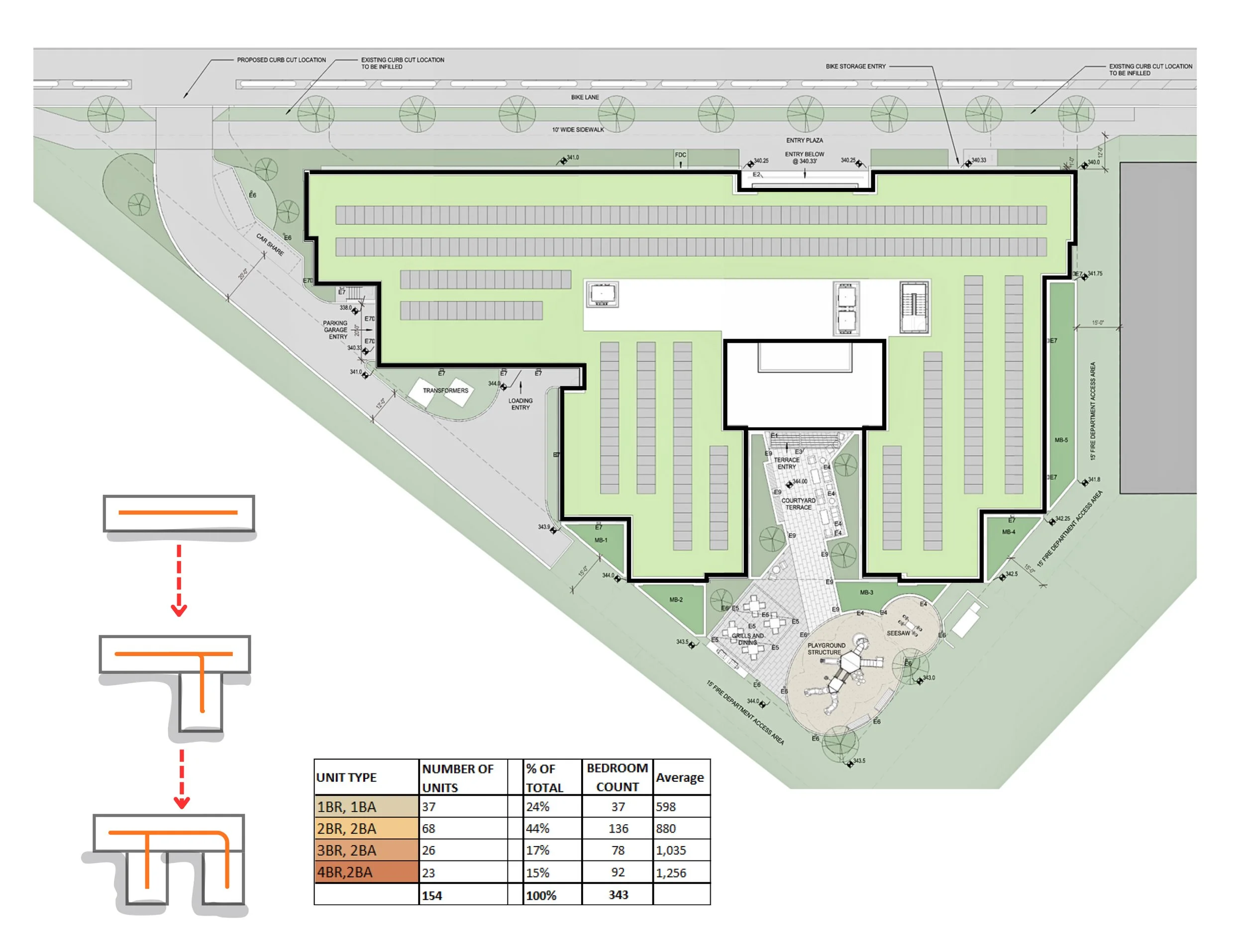
Site Planning & Programming
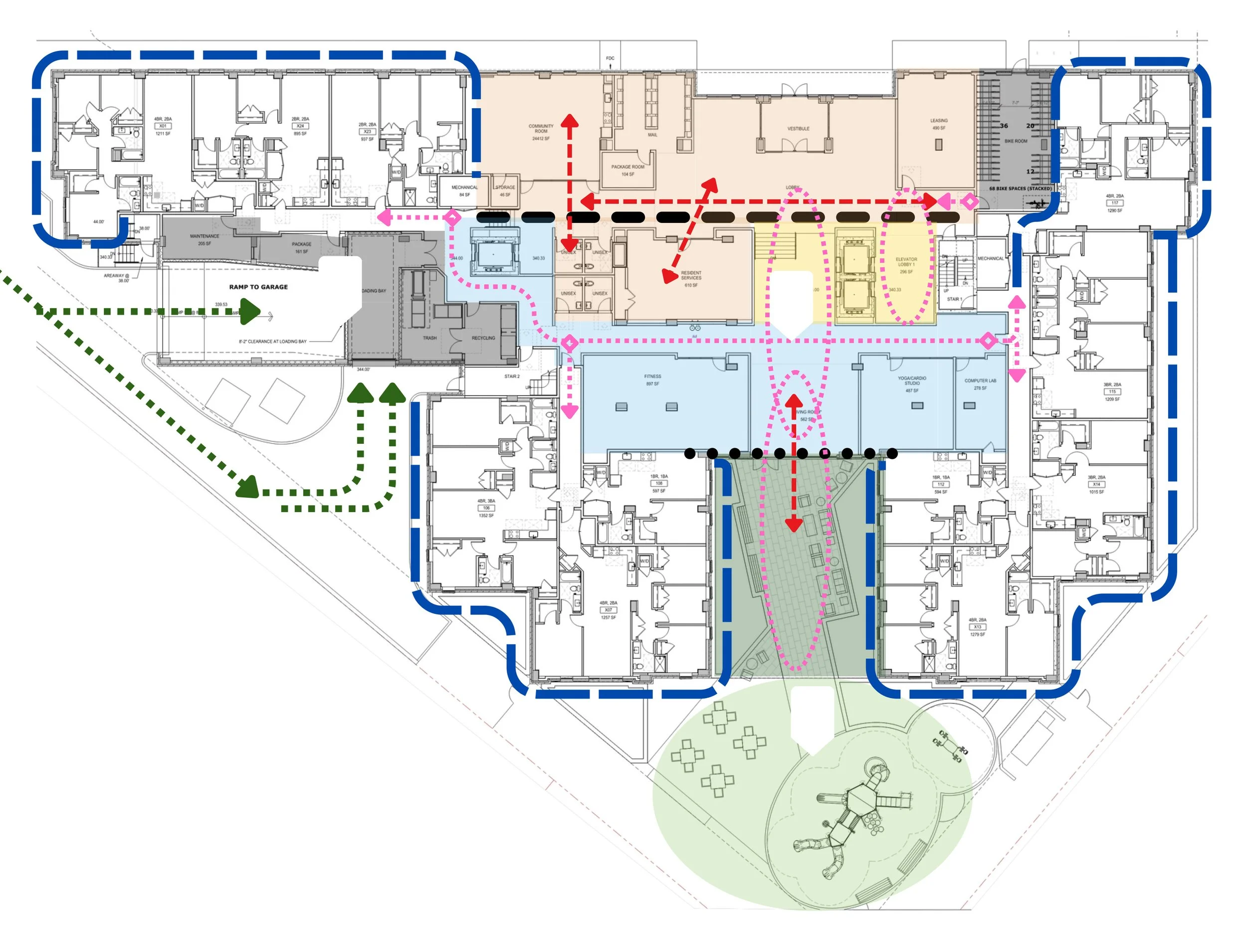
We begin with defining the site and street edge, which gives us boundaries to help with iterating to create a balance between necessary density and open space. Then, site functions are organized so public spaces are engaging and private spaces are secured, finally pathways are identified for access and egress.
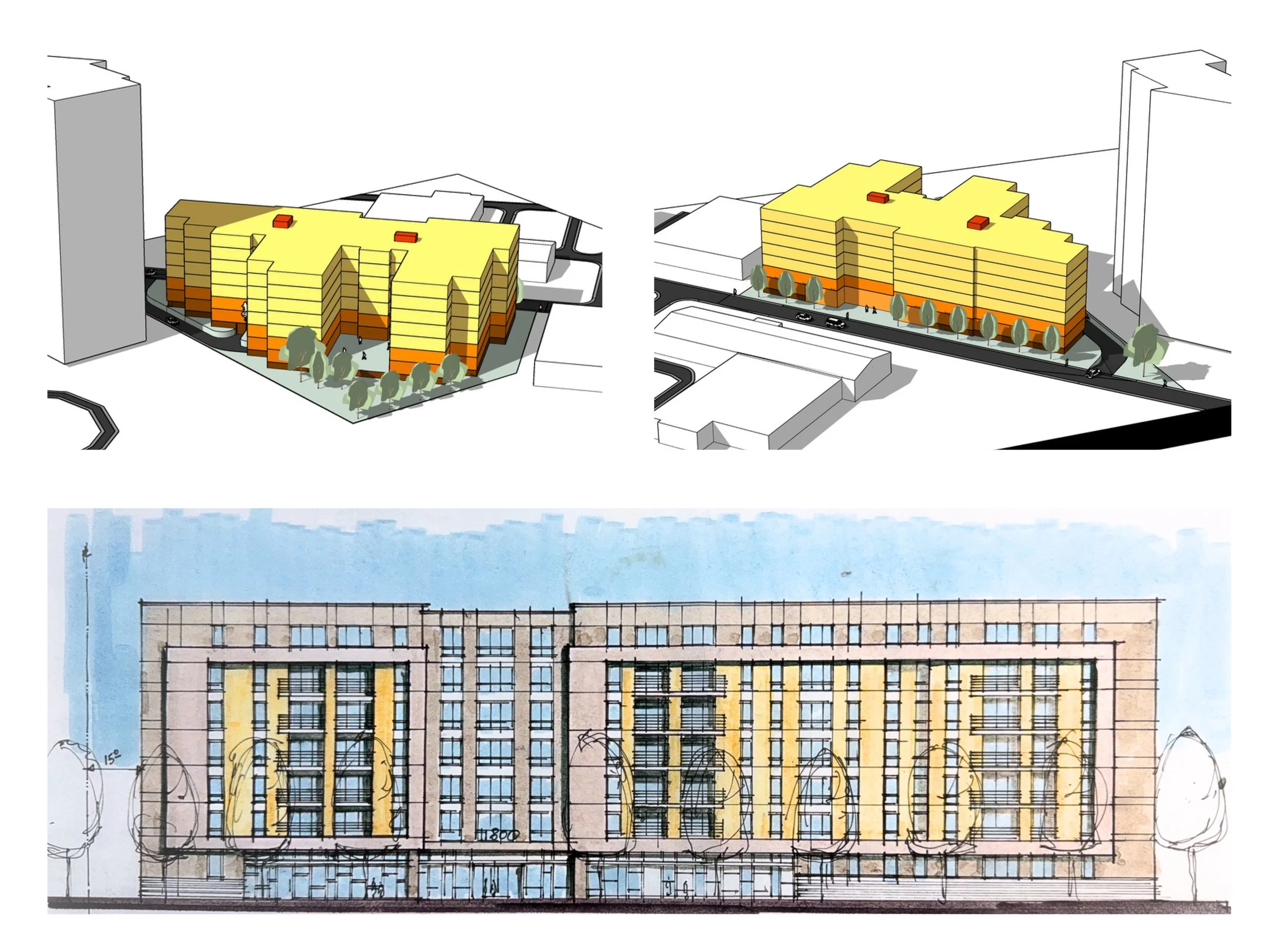
Building Design
The general shape of the project begins to form through massing, paying attention to height, setbacks, and access to natural light and ventilation. Then the façade takes priority, as exterior elements and interior layouts are manipulated to create a true logic between envelope and plan. Finally, exterior design cues are used to create clear understanding of building program at the primary entrances and spaces.
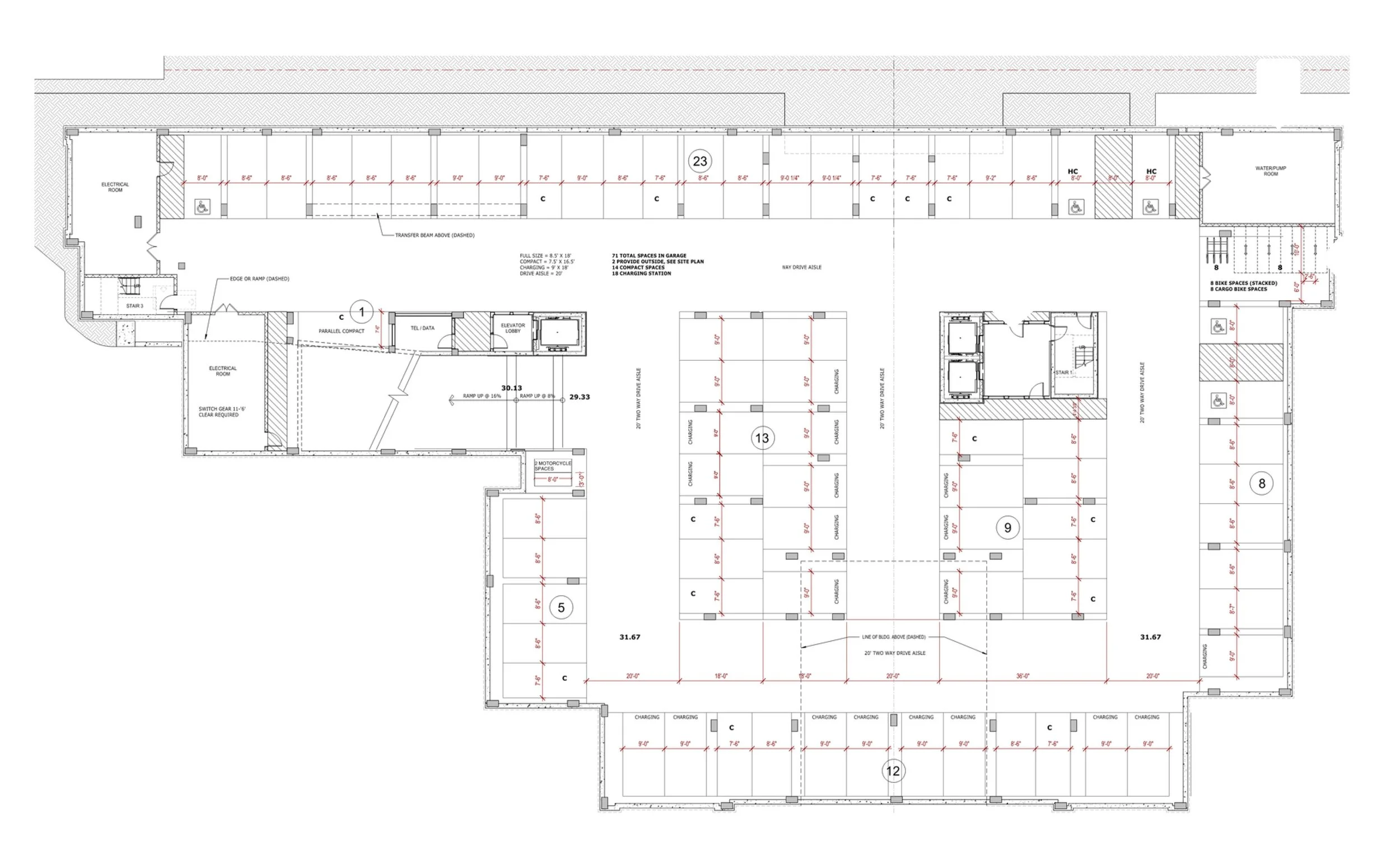
Podium & Structure
An efficient column layout provides structural performance, improves cost-effectiveness, and needed vehicular circulation. Within it, utility rooms are strategically located for direct connection and efficient service access. The core of the building is shaped from here, maximizing vertical access and interstitial spaces.
Common Space & User Experience
After shaping the celebrated main entry, the public spaces within are designated and designed. The back of house, along with maintenance areas, are kept out of the way of residents. And if needed, outdoor amenities and design can help complete the full living experience.
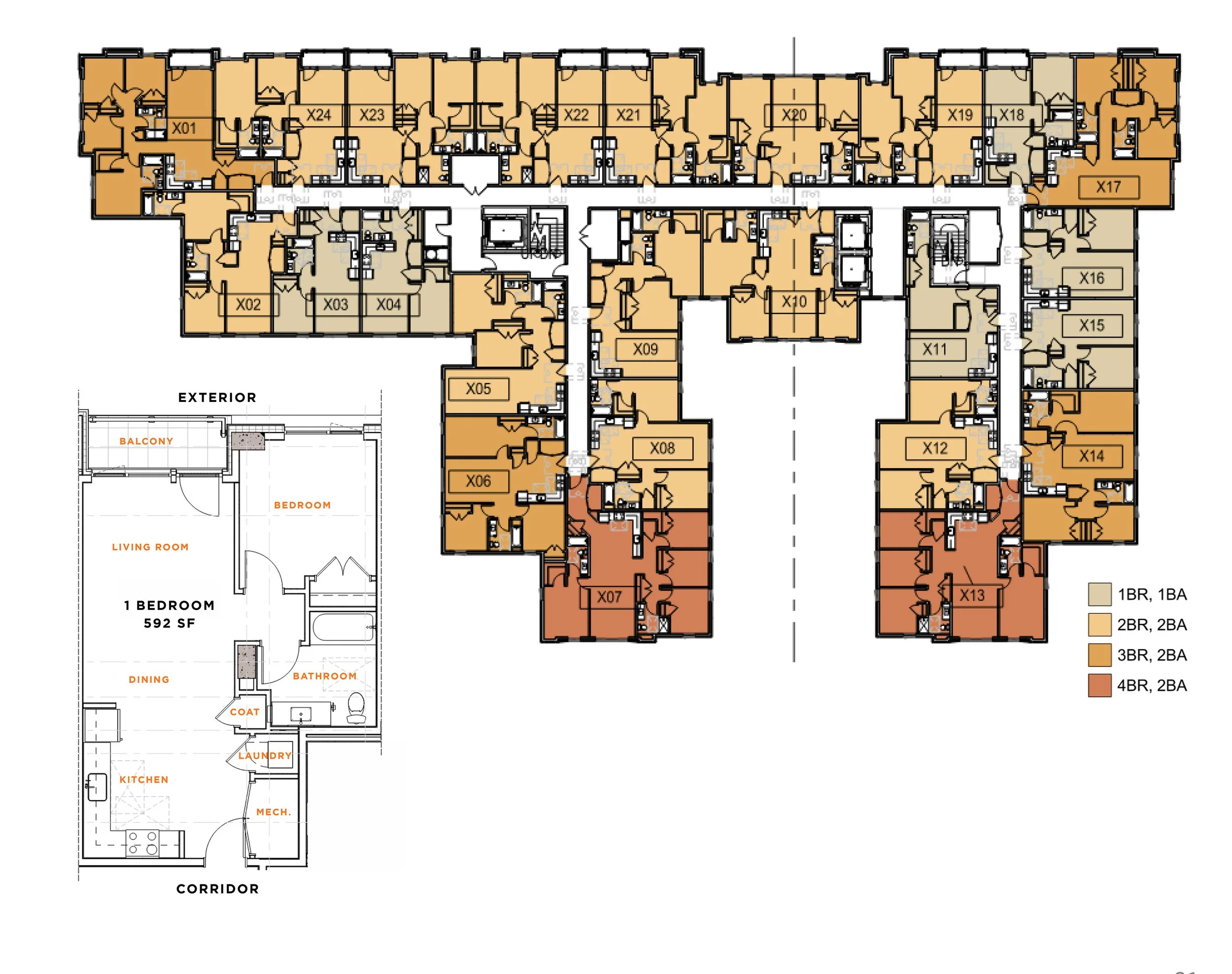
Unit Design
It all starts with efficient circulation, with the centralized cores meeting code requirements and helping optimize the unit layouts. We aim to design generous layouts with efficient space planning, that provide ample light and enhance comfort. The various units in our projects feature consistent layouts with minimal variations in configuration across each type.